I’ve been thinking about the subject of gratitude and cancer lately. With Thanksgiving this week, I think it’s good timing to write down a few of my thoughts.
I think most people get so caught up in their lives, what they are striving for, what they are working for, they lose sight of what they have.
I was recently part of a cancer thread on the internet. It was started by a woman who had breast cancer for a number of years, going through years of treatment, remission and relapses. Her latest treatment has failed, and she is out of options and is preparing to pass away. She was sharing how she was grateful for her life, and she also had some gratitude for cancer because it changed parts of her life for the positive.
Cancer patients who overcame their cancer and transformed their lives, transformed their being, they are the ones people usually hear or read about.
But perhaps that is not the norm?
In that same thread, another person shared, who has had lymphoma for the past 8 years. “I’m not so sure I’m grateful at this point. My entire 2025 has been cancer treatment and tests. I don’t have gratitude for anything.”
Reading that made me sad. Part of me does fully understand that thinking. Just like most cancer patients, some of the cancer treatments I have gone through have made me thoroughly miserable.
But I couldn’t help wondering to myself, why are you going through all of it if you have no joy in your life and nothing to be grateful for? What is the point? Is it the fear of death keeping you alive? I’m not faulting the person in any way, because I do understand. It’s such a shame that humanity’s answer to cancer is cancer treatments that sucked out this person’s essence.
Why do I do it? Why do I keep scraping myself off the floor (fortunately, I currently don’t have to scrape myself off the floor)? What do I have to be grateful for? Well, let me tell you.
It could be for something simple like, I’m done being nauseous after a chemo treatment. Or getting to see something amazing in nature, such as a sunrise or a 2000 year old tree.
But I think the things that I’m most grateful for are, watching my wife have a good laugh. Watching my children in their triumphs and helping them through their failures. Learning something new or having a witty conversation and having someone’s intellect rub on my own.
I really think the secret of happiness, or at least what I have come up with is, enjoy other people’s enjoyment. If I’m able to experience joy from other people’s joy, then I feel fulfilled.
I find myself somewhere in the cancer gratitude middle. I can be grateful for cancer for giving me a tremendous amount of time with my family. I’ve been able to be more involved with my children and enjoy watching them grow. It has forced me to look at myself, my life and see my flaws, and it’s given me an opportunity to correct things within myself. I’ve had the opportunity to meet other people with serious health problems who overcome things that you wouldn’t think possible. I’m eating healthier, exercising more and learning new skills.
On the other hand, it has really negatively impacted my finances and my ability to work. I’ve spent a lot of time going to treatments, being sick from treatments, and being in survival mode. If I die before I’m ready to go, I won’t be pleased. I guess I will have to see where I’ll end up to have my final answer on cancer gratitude.
I think it is important, especially when your life is challenging, any challenge, not just cancer, to remember what you have to be grateful for, even if it is something small. I think it enhances a person’s well-being, increases life satisfaction, and helps you remember why you are living.
What do you think? Does gratitude and cancer belong in the same sentence?
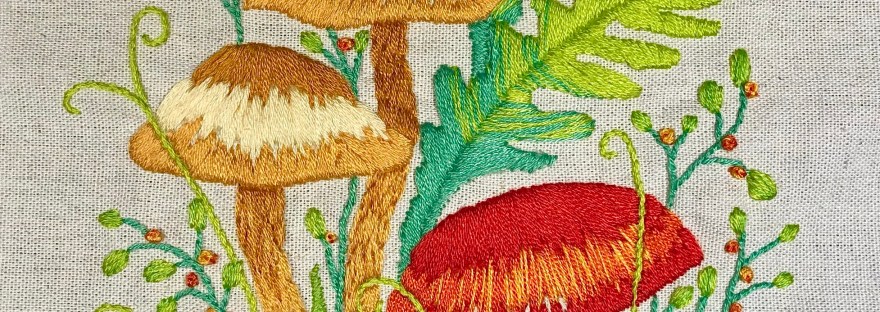
I’m grateful to have learned a new skill like growing reishi mushrooms.
When I was younger, I used to embroider with my grandmother, probably mostly to keep me out of trouble. I wasn’t very good at it due to my young age, but it is still a memory that we created.
A few years ago, I was thinking about time. You pay time for all sorts of things, and a number of them you don’t end up with anything for your time. Excessive social media use is one prime example. Scrolling for a bit can give you some entertainment, but after a certain point, you don’t gain anything.
I was talking with my wife about doing some embroidery again. She got me a kit for my birthday, and she retaught me again. I completed one and decided to start on another. I thought it would be fun on the second one to take a picture each time I worked on it, and at the end, create a video. It took me nearly a year, with some significant time off from doing it due to treatment, but I finally finished.
I hope you enjoy watching my stitches through time.
Let me preface this by saying this is not about me suddenly approaching death, so calm down. This is a post that I’ve had rattling around my head for a few years. I didn’t think I would ever write it though, thinking it might be too offensive for some people. But lately, I’ve had some death and near deaths in my circle, so I decided to write it. So if you’re easily offended, or you are uncomfortable with your own self, you better stop reading here.
I find it a bizarre practice that people take the time and effort to go to another person’s funeral when they didn’t take the time or effort to be in contact with the person when they were alive. It’s a bit of a head scratcher for me.
I’m mean, I get people wanting to pay their last respects to a person and say goodbye. But wouldn’t it make more sense to show a person how you care when they were alive? I’m pretty sure that a dead person isn’t concerned about spending time with a living person, but a living person may be. Does a ghost of a person hover over their casket with a clipboard and list, checking off people that show up for their funeral?
“Oh, Uncle Jim and Auntie Sue are here; that was really nice of them to come.”
“Hmm… No Uncle Steve…… geez, I thought we had a better relationship.”
I do believe that actions speak louder than words, or your actions go to the core of how you actually feel. If you say you care, but your actions don’t reflect that, then I think that your actions are saying what’s truly going on.
“I care about you; let’s talk/visit/create some memories.”
“I care enough about you to attend your funeral; see you there!”
To illustrate, I will use some of my own recent life’s experiences. I have an aunt and uncle in their mid 80s and by their own description and their children’s description, they are really slowing down and aren’t able to do certain things anymore. Realistically, they could pass anytime or they could live another ten years. They live thousands of miles away, so visiting is a challenge. It’s easy to let distance be an excuse and a barrier. So I have to ask myself, how much do they mean to me? I can still email, call, or video chat, which are all easy, with minimal effort.
Now comes the bizarre part about being human. Despite how easy it is to pick up the phone, a lot of people don’t. Send a text message in one minute, nope! As human beings, we come up with all sorts of excuses on why we do things or don’t do things. I know I’m guilty of it. I think an excuse is really just a justification in our own minds on why we do something, to make ourselves feel better.
I know people have their own lives and are busy doing them. But they aren’t busy all the time, and then it comes down to a choice, whether it’s a conscious one or a subconscious one. Is this person important enough to me to call/text/email/visit or are they only important enough that I would go to their funeral?
In the case of my elderly aunt and uncle, I made the choice to stay in contact with them because I appreciate having them in my life. But that was an easy one, so let’s ratchet up my internal difficulty.
Recently, another one of my elderly aunts had a heart attack. Which, in its own right is a challenge. To top it off, they discovered while she was going through all her procedures, she has cancer. So to combine age, heart and cancer, it’s a hard road going forward.
So I find myself evaluating our relationship. Again, living thousands of miles away, but this time, I’ve only spent a handful of occasions with her. She has never reached out, except through my parents, and I’ve never reached out either, so it has been a minimal relationship. I care about her as a person, but how would I feel if she suddenly died? Do I try to rekindle a relationship? Or is she someone I see at a funeral? The ball is in my court. All it is, is a choice and an action. Again, it’s pretty easy to email someone.
This post is not about me judging people; this is just an observation of mine. My whole point of this piece is to give encouragement to value the people you value in your life while they are alive and not wait to see them at their funeral.
I went to the lifespan doctor today. I sat down in her blue medical chair and waited for her to finish reviewing my paperwork. She finished up and said,
“Hold out your finger please”
You see, I was sitting next to the lifespan machine. She pulled out a thin cord that had a tiny needle attached to the end.
“Ouch”, I cried out as she stuck me with the needle and took a little bit of blood.
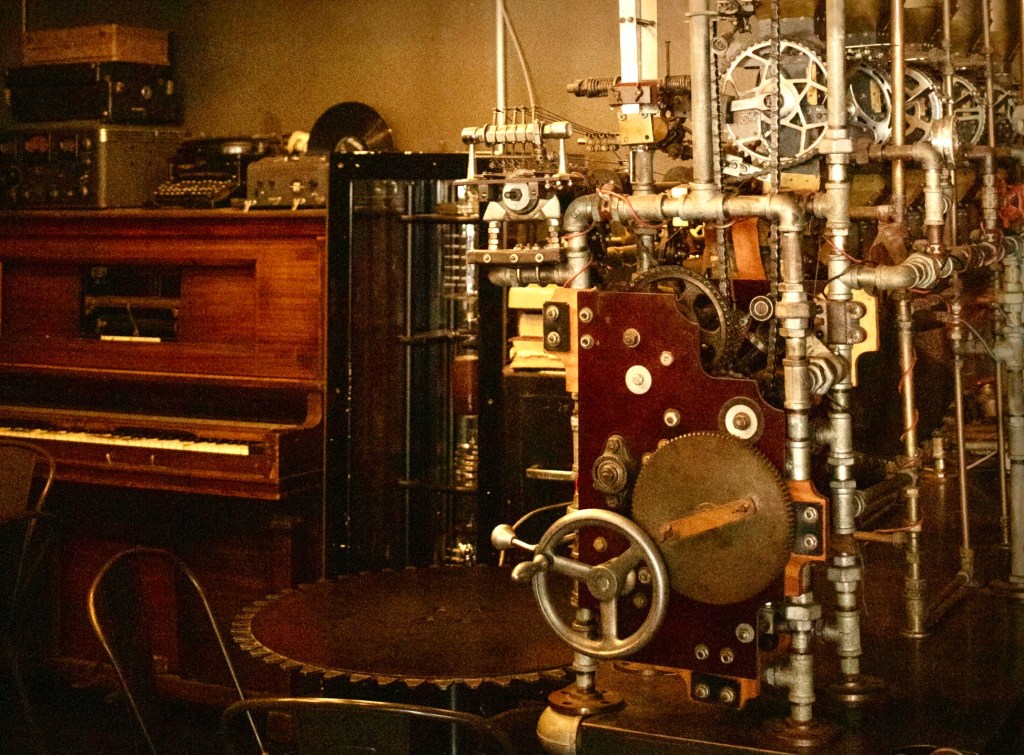
The dials and wheels on the machine started whirling as it processed my blood and was computing.
It printed out a small strip of paper with the number 521 on it.
“You have 521 days left to live”, the doctor said.
“Good to know”, I replied as I got up to leave. “Thanks”.
🤔 Of course, there is no such thing as a lifespan machine.
Sometimes, I feel like I didn’t have a worthwhile day and it was a wasted. It does leave me pondering, dang, what if I only had 521 days left to life and I just wasted one of them? Sometimes, I just have to live with that thought.
Whoever you are reading this, what if you knew you only had 521 days left? What would you do that would make them good days left?
For me, seeing my wife or kids have a good laugh and a big smile on their faces, makes it a good day.
Going out in nature and experiencing things that make me be in awe, is a good day.
Doing something creative, makes it a good day.
Spending 5 hours a day looking at instagram is a good day…… oh wait, Meta high jacked my account and wrote that in there! Actually for me, those are the days that I feel like I wasted, the ones I spend too much time looking at a screen (I only spend 5-10 minutes a few times a week looking at instagram).
Next time you have a good day, try and identify what made it good and try and duplicate it. Next time you feel you wasted a day, try and find out why it felt wasted and try and eliminate that aspect.
None of us know how many days we have left to live, 1 to 25,000, try and make them count in whatever fashion counts for you.
We don’t have a machine that tells us how many days we have left. I’m going to try and do my best not waste mine.
If you think you are too small to make a difference, try sleeping with a mosquito.
Dalai Lama
To suppress the grief, the pain, is to condemn oneself to a living death. Living fully means feeling fully; it means becoming completely one with what you are experiencing and not holding it at arm’s length.
Philip Kapleau
The best way to not feel hopeless is to get up and do something. Don’t wait for good things to happen to you. If you go out and make some good things happen, you will fill the world with hope, you will fill yourself with hope.
Barack Obama
A good spouse and health is a person’s best wealth.
Benjamin Franklin
Insanity: doing the same thing over and over again and expecting different results.
Albert Einstein
Nations do not die from invasion; they die from internal rottenness.
Leading up to my stem cell transplant, I’ve had a few people ask me if I’m scared or afraid.
Having cancer, it’s a question that I get asked frequently at times.
For those who aren’t familiar with the transplant procedure, a person gets dosed with high dose chemotherapy, that kills all of your bone marrow. All of your blood comes from your marrow, red blood cells, white blood cells and platelets. Obviously, without those cells, you die (and people do from the procedure). A couple of days after the chemo, they infuse your own stem cells back into you and after a few weeks they engraft and your body starts producing blood again.
When I was first diagnosed, I definitely had fear go through me. With death looming over me and all that uncertainty, who wouldn’t be afraid. I went over that a bit in my post “The Elephant In The Room”.
Fortunately, a plan of action was formed and I learned a few weeks after my diagnosis, that I wasn’t powerless against cancer. There were things I could do myself that would increase my odds. I started transmitting my fear, although it still took time to work out. I had to face my fears otherwise it was going to drive me crazy.
Let me tell you, being afraid is EXHAUSTING.I just can’t do it anymore. So the answer to the opening question is “no”. I’ve more or less made my peace with death and once I got passed that, there isn’t a lot to be afraid of.
Being scared all the time, I don’t know how people can do it.
Fear is meant as a temporary mechanism to keep you alive. After a certain point, people let fear consume them, and it stops you from living.
Of course, the world just went through a worldwide scare with covid. I know people whose whole lives turned upside down with fear from covid. It was really amazing to witness. People wouldn’t leave their homes for anything. Spraying all their grocery’s with bleach. Avoiding all human contact.
I couldn’t help thinking, “if you’re terrified of covid, try having cancer”. I’m not belittling people’s reactions. Everyone is at a different point in their lives, being able to handle different levels of difficulty. It was just a bit odd for me to watch from a perspective of someone who has cancer. Having myeloma is like being hospitalized for Covid, waiting to see if it’s going to overwhelm your lungs or not.
Worrying about something is like paying interest on a debt you don’t even know you owe.
Mark Twain
I must say that I do find that I do have to remind myself from time to time, to not worry or be fearful. Fear is very good at creeping into the cracks in your mind. It plants little seeds that will grow into bigger things that can be very hard to get rid of.
Cancer test anxiety! What if the cancer is coming back? What if we can’t stop the cancer? Is that pain just a pain or is it cancer? What if, what if? It can go on forever, which is why I find it exhausting. If the answer was yes, to the cancer coming back or being unable to stop it, would worrying about it change anything?
Worrying about things will not change a single thing, so why spend energy doing it?
If you stop to think about it, fear pretty much always has its root in death.
If you are afraid of spiders, they are going to crawl on you and bite you and you’ll die.
If you are afraid of heights, you are going to fall off and die.
If you are afraid of the dark, something you can’t see is going to get you and you die.
If you are afraid of Covid, you’ll catch it and die.
If you are afraid of clowns, umm I’m not sure about that one, but it probably leads to death (🤔 they are creepy and get you?).
If you have cancer, you are going to die.
If we had an amazing perfect life, living in a bubble and nothing bad ever happened to us, we would still die. Death is part of life. Fear is part of life. Being paralyzed by fear is the problem. If I’m going to die from old age or cancer (or from clowns 😜), wouldn’t it be more useful, instead of being fearful, recognize it, overcome it and make the most of each day? Make a positive change in my little section of the world. Affect what I can affect. Wouldn’t you want to do the same?
You are either in control of your mind or your mind is in control of you. I prefer to be in control and not have fear dictate my life. If your mind is in control of you, then you have to work and train your mind. And believe me, it is work and it’s ongoing. No one is born with a perfect mind. It has to be developed and strengthened. Ironically, having adversity and overcoming adversity is one of the best ways to strengthen your mind.
When I was about 8, I had a little stuff animal T-Rex. It was only about 10 inches high. I really loved that little guy. One night I was in bed and I wished really hard that the T-Rex would come to life. I was pretty sure my wish would come true. I was lying there, thinking how cool it would be to have a pet T-Rex, and then it dawned on me, what if (there’s that “what if” again) it came alive while I was sleeping and started eating me (and I died)??? I quickly threw it out of my bed, across the room. I thought, “I’ll just see the alive T-Rex in the morning”. My mind had just created the impossible, and it was terrifying.
“Fear keeps us focused on the past or worried about the future. If we can acknowledge our fear, we can realize that right now we are okay. Right now, today, we are still alive, and our bodies are working marvelously. Our eyes can still see the beautiful sky. Our ears can still hear the voices of our loved ones.”
–Thich Nhat Hanh
I was trying to come up with the opposite of fear. Would it be bravery? That seems logical but it doesn’t quite seem to fit. A better fit in my mind would be, if you’re not afraid, you probably have peace or tranquility.
So how do you obtain inner peace or tranquility? Firstly, I would say it’s not something people can have all the time. It comes and it goes for most of us. After all, we are all human and have human reactions. You have to keep working at it, and do your best.
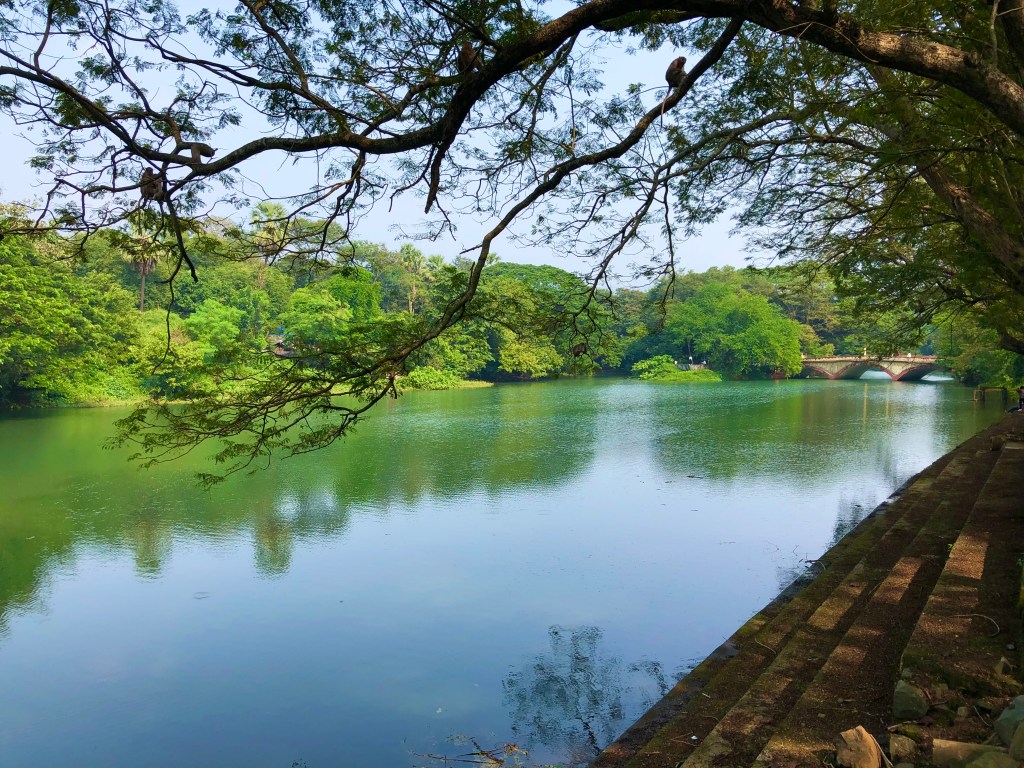
Some people obtain some peace through religion, prayer or being in a holy place. If you don’t believe in any of that (or it doesn’t work for you), try to spend time in nature, such at a forest or beach. In such places, you can face/talk about your fears, accept them and maybe find some contentment.
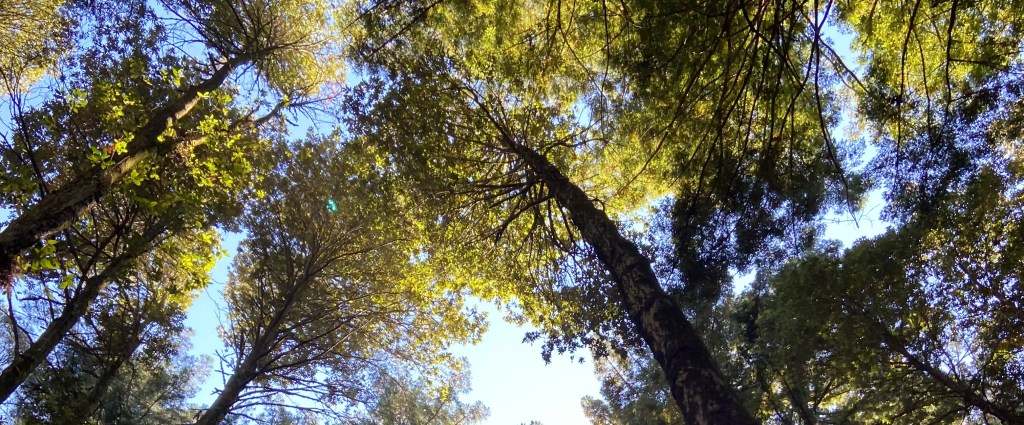
I like to spend time with giant redwood trees. When you are sitting next to a being that is 2000 years old and will out live everyone on the planet today, it can put life into some perspective. Connecting with nature energy heals your heart and mind.
Breathingtechniques can knock out fear quite quickly for immediate or unexpected fears. It helps rein in control the mind. Meditation helps you stay in control of your mind all (or more of) the time, so fear doesn’t take hold.
Practice forgiveness. You can’t have peace within yourself if you are carrying around the bitter baggage of the past. True forgiveness is a tough one for people. “I have forgiven you”. “Then why do you keep bringing it up monthly, yearly, every 5 years?”. If you can let go of grudges, then it’s easier to let go of fear.
You can practice gratitude. If you are thinking about things you are grateful for, and grateful for things that are going well in your life, you spend less time on fear. Gratitude keeps our mind in the present, whereas fear keeps our mind in the past or future.
Your mind can be either a strength or it can be a weakness. It takes effort on your part to strengthen and have control of your mind. I think it’s worth the investment of our time to do so, after all, think of the time and energy we currently invest in our fears.
Dale Carnegie says, “You can conquer almost any fear if you will only make up your mind to do so. For remember, fear doesn’t exist anywhere except in the mind.”
So snuggle with your stuffed dinosaurs, for they won’t bite. High five the next clown you see for trying to make you laugh. And maybe dying is really just the great next adventure.
If you recall the happiest moments in your life, they are all from when you were doing something for somebody else.
Desmond Tutu
Carefully watch your thoughts, for they become your words. Manage and watch your words, for they will become your actions. Consider and judge your actions, for they have become your habits. Acknowledge and watch your habits, for they shall become your values. Understand and embrace your values, for they become your destiny.
Mahatma Gandhi
If you want to be miserable, think of yourself. If you want to be happy, think of others.
Sakyong Mipham
We can complain because rose bushes have thorns, or rejoice because thorn bushes have roses.
Have you ever given awareness or paid attention to your breathing? Sometimes when I’m watching TV in the evening, I’ll randomly do a check in, to see how my breathing is going. Sometimes, I’m surprised to find that I’m breathing rather shallow. Especially, I notice it when I’m watching sports and I want my team to win. I’m stressing out over something silly, like a sports game, that actually doesn’t matter at all.
Working, driving, family, friends, money, pets, a chronic condition, waiting on test results, any number of things or life in general, can be stressful!
I’ll let you in on a secret of mine.
I’m afraid of needles, especially blood tests. I laugh at the irony of it all the time. Go figure, I would get a blood cancer.
For months, in the last number of years, I have had to go in for weekly blood tests. I could feel myself wind up as the days went by, to see the vampires, got closer and closer. Feeling that heavy pit in my stomach. Sitting there, in the chair, as they put that rubber band on your arm. Waiting as they are about to stick in the needle. Darn! They missed the vein, now they have to dig around for it or stick me again (I actually have easy veins too). Sometimes, I break out in a sweat, heart pounding. Shaking, when it’s all over.
Well, that doesn’t sound like a good state to be in.
I was just put into fight or flight mode, and I need to be in rest and repair mode as much as possible. A person doesn’t think clearly when they are in fight or flight state.
Breathing is the best way to get back into rest and repair mode and stop stressing or freaking out. It doesn’t matter the reason you are freaking out for these techniques to work. Sometimes just giving awareness to your breathing can be helpful. Just recognize and correct the situation.
I would like to give credit first, mainly because I don’t think it’s said enough, to India, to yoga, to preparing to meditate and meditation. Not to our western version of yoga, the real deal thing developed in India, where these breathing techniques come from. I will always be grateful for the life altering practices that I learned there.
Technique 1:
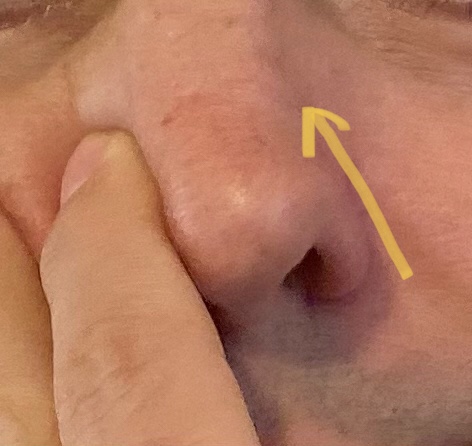
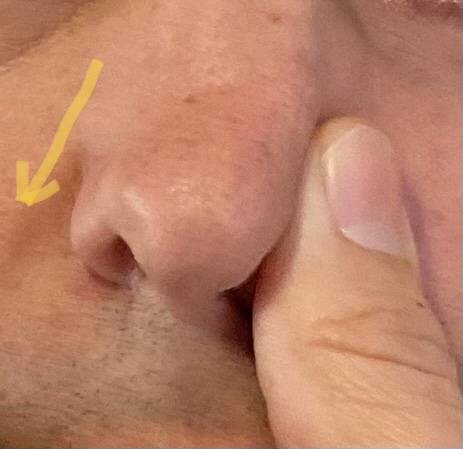
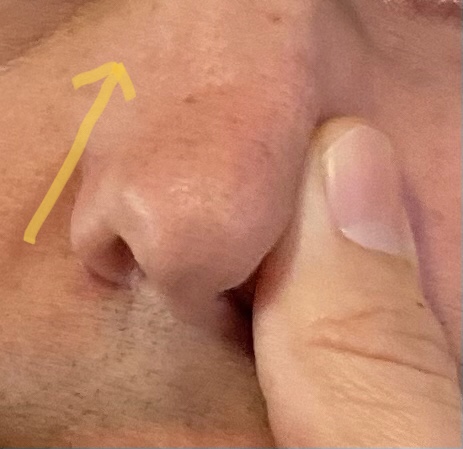
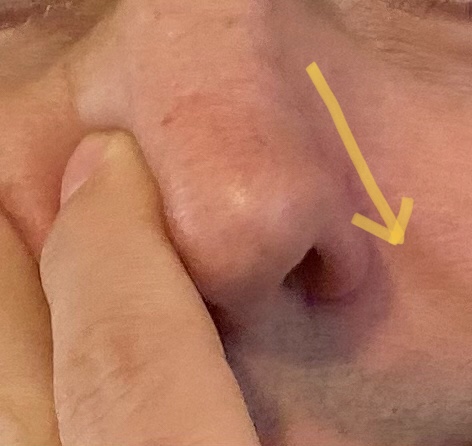
Alternative Nostril Breathing. This is my personal go to. I do it when I feel stressed and need to calm down and reset.
Begin by holding your right nostril closed and breathe in through your left.
Next, close your left nostril and breathe out through your right nostril.
Keep holding your left nostril closed and breathe in through your right nostril.
Then close your right nostril and breathe out through your left.
This completes one set. Try and count to yourself the same number of counts breathing in and keep it the same number breathing out. Whatever number is comfortable for you. (I’m pretty sure I missed my calling as a nose model, what do you think? 🤪)
I also do a version of this, for at least 10 minutes, every night before I go to sleep. This version must be done when you are calm and not stressed. It’s the same except, you hold your breath for a count of 1 after you inhale both times.
Technique 2:
Sigh Breathing. I really like this one too. I do enjoy a good sigh.
Sit up straight.
Take a deep, slow breath in through your nose, filling your lungs to full capacity.
Hold your breath for 3-5 seconds.
Release your breath through your mouth with a sigh (or a good groan 😜).
Repeat until you feel better.
Technique 3:
4-7-8 Breathing. This one is amazingly good and quick for snapping you back into instant clarity. I think maybe it has to do with the lack of oxygen coming in at times. Again, alternative nostril breathing is my number one choice, but this one is really helpful in certain situations.
Start by exhaling completely.
Breathe in for a count of 4.
Then hold your breath for a count of 7.
Exhale for a count of 8.
Repeat. I find that it usually only takes 5 times or so to be re-centered.
A quick note on counting. Make sure you are counting the same way, with the same timing. I can count to 8 in the same time as 4, but that defeats the purpose of doing these breathing exercises. 8 should be twice as long as 4!
Technique 4:
Square Breathing. I don’t use this one much, but I know people who really like it.
For this one, the number count doesn’t matter, do what works for you, but the number has to remain the same (i.e. a count of 4 or 5).
Start by exhaling completely.
Breathe in through your nose for the count of 4.
Hold for the count of 4.
Exhale through your mouth for the count of 4.
Hold again for the count of 4.
Repeat.
Technique 5:
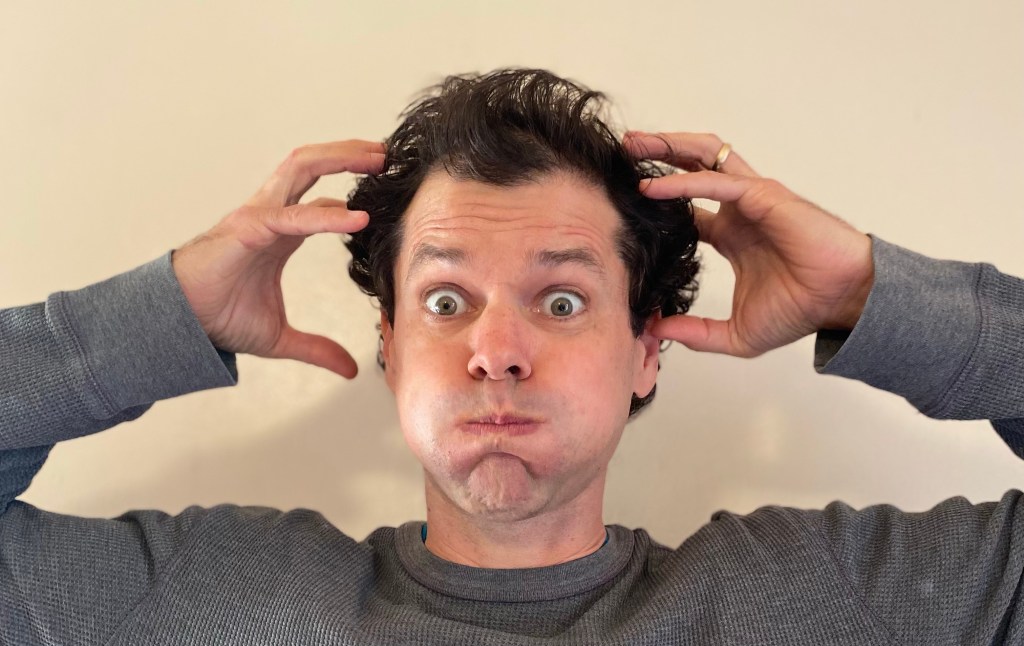
Straw Breathing. This is a fantastic one for kids.
Breathe a full breath in through your nose.
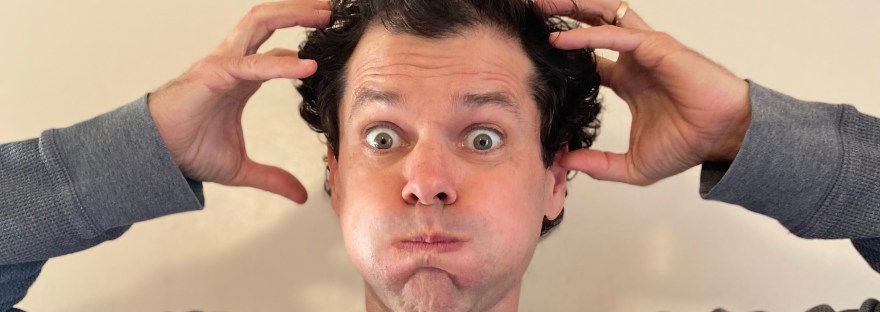
Puff up your cheeks with air and blow out slowly through your mouth like you had a straw in your mouth.
Repeat.
For me personally, I can get through my bloods tests and IV’s fine now (and most other things), without freaking out. I’m still very much a work in progress.
I was trying to think of a number 2 for de-stressing besides breathing. Breathing is number one on my list because it’s so effective, it doesn’t cost you anything, and you can do it anytime and anywhere. I would say that exercise would be number 2. But it’s funny though, if you’re exercising, give awareness to your breath, and you’ll notice you breathe very deeply and rhythmically, usually the same count in as out. So in the end, is it breathing again?
Breathing is so amazingly simple and it is so amazingly effective. This should give you a number of tools to help you get through life or de-stress. I hope you find one that you like.
Breathing will help you regain yourself when you lose yourself. But if you want to keep a level head and not lose yourself to begin with, meditate daily, but that’s a whole other topic…
I’ve been having this conversation a few times with my family as of late, most notably with my teenagers. Teenagers are at a transformation point in their lives, so it can be pretty easy to have conversations like this. But, I think it’s an interesting question for everyone.
What kind of person do you want to be?
When I was working and walking around the job, I would be constantly thinking. I had a complex job and being a supervisor, it was part of my job to figure things out and set up people with tasks for the day. Come to my knowledge, I tend to frown when I’m thinking.
“Why are you grumpy all the time”, someone asked me.
“What??? I’m not grumpy”, I replied.
“You walk around frowning a lot”.
“I do? I’m just thinking”.
Without my knowledge, I had become a grumpy person and that’s not somebody I want to be. I started consciously walking around with a smile on my face and all of a sudden I wasn’t a grumpy person anymore (although, I’m sure I still frown think from time to time).
We had a new neighbor move into the neighborhood last year, a few houses down from us. The husband (I’ll call him Fred for this story) and his wife are probably in their 30s and they just had their first child. We are fortunate to live at the end of a quiet street and all of our neighbors have multiple children, ages between 4-17. The road dead ends, so it’s a safe and perfect place for children to play.
Shortly after Fred moved in, he started grumbling and fighting with his neighbors on either side of his house about things he was unhappy with about their houses and yards. Fred also seems to like his drink too much at times and caused some late night disturbances with the neighbors across from him. As you can tell, he was quickly making friends.
After they had their baby, as any parent could tell you, the beginning months can be a challenge, especially for first time parents. Their baby is sleeping or not sleeping at all hours of the day. Fred has decided the whole neighborhood has to be quiet while the baby is sleeping during the day, especially all the neighborhood children playing outside. He has taken it upon himself to come out and yell at the kids for playing, which of course isn’t going down too well with the rest of us.
What about the garbage trucks collecting garbage? Delivery people? People cutting grass? Umm, ok….seems ludicrous to me. I get if the kids were being excessively noisy or obnoxious, but they aren’t actually being that loud.
Of course, after hearing about this man yelling at my son, I wanted to march down to his house and tell him a thing or two (that happened, but not by me). But then the thought came into my head, does he realize that he is the neighbor in the neighborhood that everyone hates? (I don’t hate him, I actually appreciate the learning experience).
It would seem to be more constructive to ask him if this who he wants to be (and to tell him about white noise machines, like fans or air purifiers 😜). Maybe he doesn’t know the neighbors despise him and are praying for him to sell his house and move out. I’m sure there is more to Fred than I know, but to the neighborhood, he’s the neighborhood jerk. I doubt that is who he would like to be.
I recently watch a show on Netflix called Mission Joy- Finding happiness in troubled times. It was about the Dalai Lama and Archbishop Desmond Tutu, their lives, challenges and why they are joyous despite having every reason to be bitter and be a complainer. It was a conscious decision not to be that way and live life joyously and spread that joy. I highly recommend the show. It was just a treat to watch those two interact, laugh and be brothers despite their religious differences.
The main conversation I was having with my children, was about complainers. Complainers are interesting people, because they always can find something to complain about, and it usually doesn’t take long for them to start once a conversation starts.
One of my kids was in the living room, and they were complaining about this and they were complaining about that. Finally, I had enough and exploded out, “why don’t you do something about what you’re complaining about instead of complaining about it”. (Dex might have had something to do with my explosion).
Complaining does nothing constructive, other than driving everyone around you crazy and not wanting to be around you. If something bothers you, do something about it. A person could spend more time and energy complaining about something than it actually takes to rectify the situation. (Of course, by my previous example, there are better or worse ways of doing something about things).
My wife and I were talking about complainers and she poised the question, “Do complainers, know they are complainers?” Briefly I thought and said “I don’t think they do”. I think what people who complain excessively are after, is attention.
I asked my children, “Do you want to be a person who stays in one place and just complains about everything in their lives or do you want to be a person who takes the lead, overcomes things and can change the world around them? Who do you want to be?”
Toxic people come up when you are dealing with cancer, more specifically, not being around toxic people when you are trying to recover from cancer. I do believe that, that’s completely valid and good advice. Toxic people are hard to be around when you’re healthy.
Then the thought occurred to me, what about toxic patients?
“God, why won’t this guy just die already!”
Certainly, anyone who has a chronic illness has a good excuse to complain. But to the point, where everyone is sick of you? One of my goals is not to become a person like that. That’s not who I want to be.
Early on in my cancer journey, about three years ago now, I went to India for about a month for Panchakarma treatment. The treatment is essentially purging your toxins (which can include mental toxins) and having your reset button pressed. I had just gone through the wringer with chemo and still having the mental struggles that come with cancer.
I wasn’t able to get a room at the clinic in India, so I rented a room a short distance away and took a tuk tuk back and forth. On the tuk tuk trip, sometimes I would see a crippled man on the corner, shirtless with a ragged cloth around his lower half. It looked like his legs had never worked from birth. He would be sitting on the ground, on his torso, with his skinny twisted legs folded behind him for probably hours.
The image of him is burned into my mind. From my point of view, I had been dealt a bit of a bum hand with myeloma. BAM, some perspective had just slapped me upside the head. What do I have to complain about? All of a sudden, I knew I had and will continue to have, a better and less challenging life than this person, myeloma and all. From now on, when ever I feel like complaining about things, an image of this man with his twisted legs, breathing in tuk tuk exhaust, pops into my head to remind me to be grateful for what I have.
I met a number of amazing people on that trip to India. Two that stand out in my mind were a Buddhist Lama and his interpreter monk. I have been blessed to have met and spent time with some very holy people in my life. These people have a presence about them and just being in the same room as them, you know that you are in the presence of someone really special. This Buddhist Lama is one of those people. But, this particular little story is about his interpreter monk.
She (yes, it’s a she, I generally think of monks as men) was born with a rare heart condition. She was very small and weak as a child and was always getting sick, because of it. She was so sick and weak one time she couldn’t get out of bed for months. She kept taking Tibetan herbs and praying, and she eventually got stronger and better enough to get up and go on with life, but still had this heart condition. She saw western medical doctors and had multiple heart surgeries, but the condition is not curable. Her heart can stop beating at any moment and she will die.
I did not know any of this when I first met her. She has one of the best, brightest smiles, that I’ve ever met and she is always smiling. How could this person exist, who is so full of life and happiness, literally have their heart stop beating at any moment? Shouldn’t she be grumpy, gloomy and miserable? Curled up in their bed, crying? She was the complete opposite!
Again, what do I have to complain about? She is a person who I would like to be like. She chose to be this happy, amazing person and not be consumed by what her body is doing. She has heart pains and challenges but sloughs it off, speaks many languages and be an translator for a important Lama. We had many conversations about life in the monastery, food and movies (she’s a big movie lover).
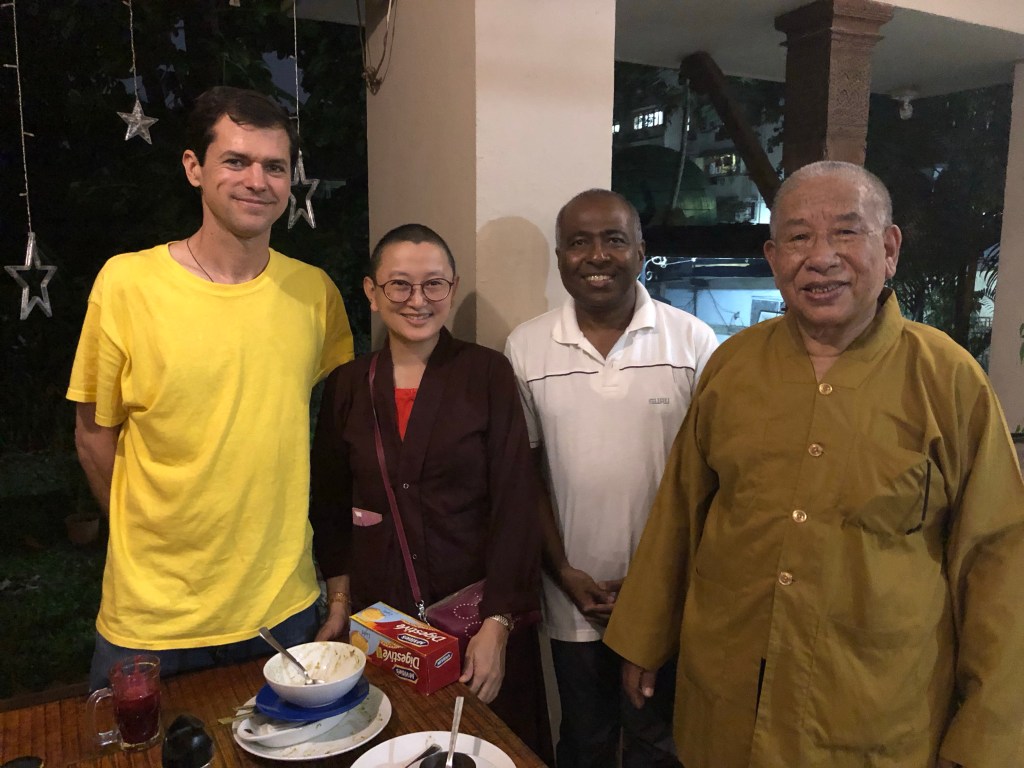
I’m in the yellow, the Lama’s interpreter, my Sri Lanka friend and the Buddhist Lama on the right
People will either show you who you want to be or who you don’t want to be. Things aren’t always easy, adversity comes in all forms, and everyone has it at points in their lives. Having cancer is hard. Having chemotherapy is hard.
Do I have the right to complain? Yes, I probably do. Do I want to? No, I don’t. Do I want to be afraid of cancer, afraid of it coming back, grumpy, a jerk, and someone that people don’t want to be around? No, I don’t. Anybody can justify doing/being anything.
Do I want to be happy and smile in the face of adversity, be a good person, a good example for my children and lead the way? Yes, I do. It’s who I want to be. It is my choice. Everyone has that choice. It is up to all of us to decide who that person is.
From the moment you were conceived, it was 100% guaranteed. Unavoidable, no dodging it. Whether you eat health food or junk food. Whether you have perfect health or have cancer. Whether you have all the money in the world or are dirt poor. It’s the elephant in the room, that people so desperately try to avoid. You are going to die.
Honestly, it’s not a concept that I thought about a lot. I had just completed my roaring thirties. Everything seemed to be going, more or less, according to my plans. I had my goals and I was on a straight path to achieve them.
All of a sudden, I had my “you have cancer” moment and the eventuality was there, looking me in the face. “Holy crap, would you look at that”. It was always there, but the possibility of it was so far off, it was easy to ignore.
You almost have to laugh at the absurdity of it all. Someone just died right now, as I typed these words. People die every day. People live every day. A 25 year old in the prime of life, perfectly healthy, who wasn’t supposed to die, died in an accident. Someone, with stage four cancer, who was supposed to die, got better and is still living.
The longer I’ve thought about it and believe me, I’ve given it some thought, I’ve come to this conclusion. When it’s your time, it’s your time. Not that I don’t believe in free will and willpower to change your perceived destiny. Cancer, treatment for cancer, accidents, pneumonia and whatever you can imagine, isn’t going to take me until it’s my time.
I think fear, hits the nail on the head for most people, when it comes to death. I do personally believe in a soul, an afterlife and reincarnation, so that is somewhat helpful in removing fear. Fear of the unknown. I don’t think I fear death, but honestly, that’s easy to say right now. I will see when the time eventually comes, how true that is. Talk is cheap. Nothing like things coming to a head, to test your beliefs and resolve.
Personally, it was interesting for me. My first thoughts after hearing those famous three words from the doctor, weren’t about my well-being. They immediately went to the well-being of my wife and my young children. It was a tremendous weight on me. Would they be alright without me? It felt like I was the Titan, Atlas, holding up the weight of heaven and earth on my back. It was crushing me.
It took me, probably 2 years to set down my gigantic boulder. I realized, no matter how much I wanted, at a certain point, it’s out of my hands. I can put in my best effort, my best foot forward, but at some point, it will just be my time. Death was standing there, looking me in the face, we smiled, and I said “I’ll see you when I’m ready, I have more to do right now”.
I had just come to peace with it.
Life will go on after I pass. My wife’s and children’s lives will go on after I pass. I don’t know if that will happen in a year or fifty, but it will happen. At some point they will pass. Life (and death) will go on.
I have new goals and things that I want to do with my life, before I’m done. I’m curious if I’ll achieve them before I move on.
I’m going to keep living while I’m living. I find the previous sentence an interesting one. Only because, a lot of people don’t actually live life, they just exist. Waiting for something to happen to them, waiting to die? I don’t know, I suppose it’s different for everyone. I like to do a check on myself from time to time. Am I living or just existing?
It’s interesting listening to people with near-death experiences. I think I’ve only heard stories about how warm, loving and life changing for the positive they were.
I don’t know Anita Moorjani personally, but from what I do know of her, I am a fan. She was diagnosed with Hodgkin’s lymphoma and did not elect treatment and ended up near death and in a coma a few years later, dying from lymphoma. She had a near death experience and lost her fear and ended up getting better. Quite an interesting story. She talks about her experience in a Ted Talk if you’re interested.
If you don’t believe in God or an afterlife, here is a scientific viewpoint. Albert Einstein said with his first law of thermodynamics, “Energy cannot be created or destroyed, it can only be changed from one form to another”. You are made up of energy, enough to power a 20 watt lightbulb at any given time. When you die, that energy can’t cease to exist. Where does it go?
In my small world, I can look around me and see people struggling with fear and their own mortality. I advise people to let go. Not to let go of living, but of the fear. Swimming upstream is exhausting, sometimes you just have to go with the flow of life. An orange is still going to be an orange, no matter how much you want it to be an apple.
It’s going to happen no matter what, so stop worrying about it. You are meant to live and you are meant to die. When you are doing what you are meant to do, that should bring some comfort.
I encourage you to think on it. Think about your life and death, and try to find some peace within yourself. After all, death could be the greatest adventure you don’t know about?




 Carrots Over Cancer